
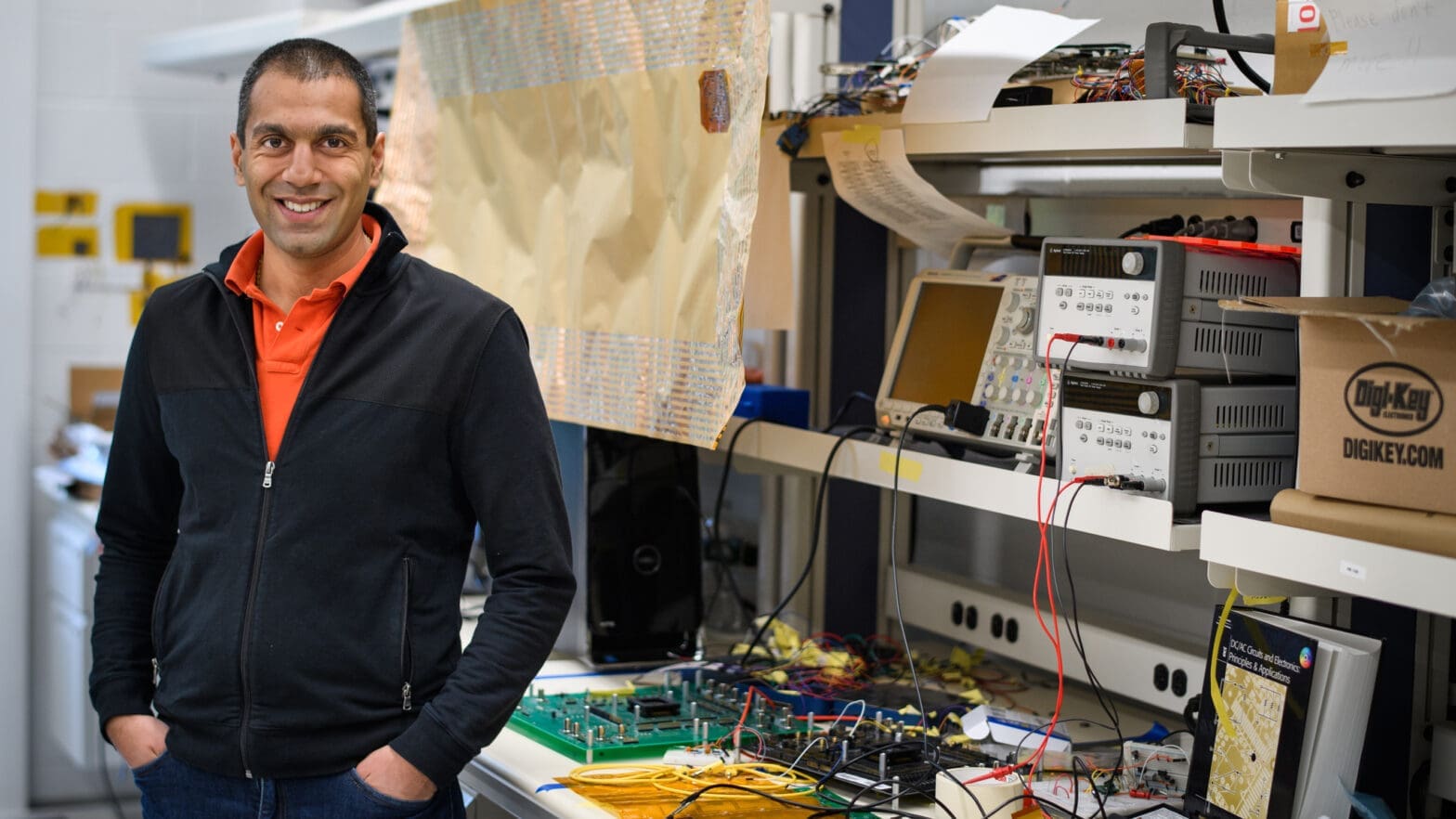
Many startup stories begin in a garage.
EnCharge began in a research lab.
Naveen Verma, a professor at Princeton University, spent years studying new approaches to computing. In 2017, his team made a breakthrough that could dramatically improve how efficiently AI systems process data.
That discovery eventually became EnCharge, a startup building highly energy efficient chips designed to run AI directly on devices like laptops and desktops.
The journey from academic research to venture backed startup was not immediate. It took years of research, careful timing, and the right investors who understood deep technology.
In a conversation on the How I Raised It podcast, Verma shared how EnCharge went from university research to raising a large Series B round and building a new generation of AI hardware.
For founders building technical products, his story offers several useful lessons.
1. Real Breakthroughs Come From Understanding the Problem First
Many people imagine scientific breakthroughs as sudden moments of inspiration. Verma says the reality is usually much more methodical.
Instead of chasing random ideas, his research team focused on understanding where computing systems were heading and what problems would emerge in the future.
As machine learning systems grew larger, two issues became obvious:
- AI models required massive amounts of computation
- They also required moving huge amounts of data
Both problems consume enormous energy.
Verma and his team began exploring a concept called in memory computing, which allows computation to happen directly where the data is stored rather than constantly moving it between systems.
As he explained:
"If you study the trajectory of the technology, you can identify what the real problems are going to be several years down the road."
That insight ultimately led to the architecture behind EnCharge's chips.
For founders, the takeaway is simple. Breakthrough companies often start by identifying the right problem before trying to invent the solution.
2. Not Every Research Breakthrough Should Become a Startup
After discovering the technology, Verma faced an important decision: what should he do with it?
At the time, he was a professor at Princeton University, not a typical startup founder, which made the decision less straightforward than it might seem.
There were several possible paths:
- License the technology to an existing company
- Work with industry as an advisor
- Or start a company to bring the technology to market
Launching a startup was not the obvious choice.
Building hardware companies requires enormous capital, long development cycles, and strong industry partnerships.
Verma ultimately chose to build a company because he believed the technology required deep understanding to turn it into real products.
"Giving this technology its best shot meant being deeply involved in translating it into real systems."
For research based founders, the key question is not simply "Can this become a startup?"
The real question is whether the founders are the right people to turn the technology into a product.
3. Timing Matters More Than Most Founders Realize
One of the most surprising parts of the EnCharge story is how long the technology remained inside the university.
The breakthrough happened in 2017.
The company was not spun out until 2022.
During those five years, Verma and his team focused on reducing technical risk.
They built:
- The core architecture
- The surrounding software stack
- Multiple silicon prototypes
Much of this work was funded by research grants from organizations like DARPA and the Department of Defense.
This gave the team time to experiment and fail without the pressure of venture capital timelines.
Verma explained the tradeoff clearly:
"The day you take venture capital, your agenda changes."
Once investors are involved, companies must operate on clear milestones and timelines. That can be dangerous if the underlying technology is still uncertain.
For deep tech founders, this is an important lesson. Sometimes the smartest move is delaying venture funding until the technology is ready.
4. Build an IP Strategy Early
Another major advantage of developing the technology inside the university was the ability to build a strong intellectual property portfolio.
During the research phase, Verma and his team filed patents covering the core technology.
When EnCharge eventually spun out of Princeton, the company licensed five foundational patents.
That IP became an important part of the company's early story.
Some investors could not fully evaluate the technical details of the architecture. But they could understand the strategic importance of protected technology.
As Verma noted, a clear patent strategy helped provide credibility during fundraising.
For founders building technical products, patents are not just defensive tools. They can also signal long term differentiation to investors.
5. Before Raising Money, Talk to Customers
When EnCharge began preparing to raise venture capital, the team did not yet have paying customers.
But they had something just as valuable.
They had conversations with potential partners.
These discussions helped answer key questions:
- Would this technology solve a real industry problem?
- What features would customers need?
- How would companies integrate the chip into their systems?
Verma emphasized that founders should have a clear story about the next milestone before raising money.
Investors want to know what the funding will unlock.
In EnCharge's case, the next step was clear. The company needed to work closely with strategic partners to turn the architecture into real commercial products.
6. Finding the Right Lead Investor Is the Hardest Step
The first venture round is often the most difficult.
Not just because founders need capital, but because they need the right partner.
EnCharge eventually raised its Series A from Anzu Partners, a firm that focuses on breakthrough industrial and deep tech companies.
That alignment was critical.
Verma knew the company would succeed or fail based on its technology differentiation. The lead investor needed to understand that from the beginning.
"Our unfair advantage is the fundamental technology."
The goal was not to find investors excited about market trends.
It was to find investors who understood the technology at the core of the company.
7. Investors Should Bring More Than Capital
As EnCharge built its Series A syndicate, the team looked beyond simple funding.
They asked what each investor could contribute to the company's growth.
Some investors brought strategic industry connections.
Others helped with operational questions such as:
- Hiring and compensation
- Advisory boards
- Scaling the organization
Early stage companies face countless decisions. Investors who are willing to engage in those conversations can make a meaningful difference.
As Verma put it, the best investors are not those who have all the answers. They are the ones willing to participate in the process.
8. Series B Is When the Company Shifts From Building to Selling
By the time EnCharge approached its Series B round, the company had reached an important transition.
The early years were focused on product development.
Now the focus shifted to bringing the technology into real markets.
Verma described this moment as moving from an inward focused company to one ready to send its products into the world.
That shift influenced the next set of investors.
Series B partners needed to help the company:
- Scale production
- Enter commercial markets
- Identify new applications for the technology
Strategic investors also became more relevant at this stage, since they could provide both technical partnerships and business opportunities.
9. Advice for Researchers Thinking About Starting a Company
Toward the end of the conversation, Verma shared advice for researchers and professors who may be sitting on promising ideas but are unsure whether to turn them into startups.
One of the biggest mindset shifts, he explained, is recognizing the difference between academic success and building a company. In research, the goal is often discovery and publication. In a startup, the goal is turning an idea into something that solves a real problem for real customers – and convincing them to actually pay for that solution..
That transition requires being honest about what stage the technology is in and whether it is ready to leave the lab.
For many researchers, the safest path is to keep exploring the idea within the university environment until the core risks are better understood. Research grants, university labs, and academic collaborators provide the time and flexibility to experiment, fail, and refine the technology before the pressure of venture capital enters the picture.
But once the technology reaches a point where it can meaningfully solve industry problems, the opportunity to build a company becomes much more compelling.
For researchers considering that leap, Verma’s advice is simple: stay grounded in real world problems, surround yourself with partners who complement your skills, and be prepared for a very different kind of journey than academic research. But don’t wait too long, or the market opportunity may pass you by.
The Bigger Lesson for Founders
The EnCharge story is not a typical startup journey.
It spans university research, government grants, intellectual property development, and multiple venture rounds.
But the underlying lessons apply to many founders:
- Focus on solving real problems
- Reduce technical risk before raising venture capital
- Build an IP strategy early
- Talk to potential customers before fundraising
- Choose investors who understand your company's core advantage
- Take the leap and go for it!
Good Luck :)