
Every year, thousands of founders dream about building their companies in the United States.
Some move for customers. Others for talent. Most eventually arrive for one reason: access to capital.
But making the move is only the beginning.
The harder challenge is building credibility in an ecosystem that runs on introductions and relationships often determine which companies get funded.
Sarah Lucena didn't arrive in Silicon Valley with that network.
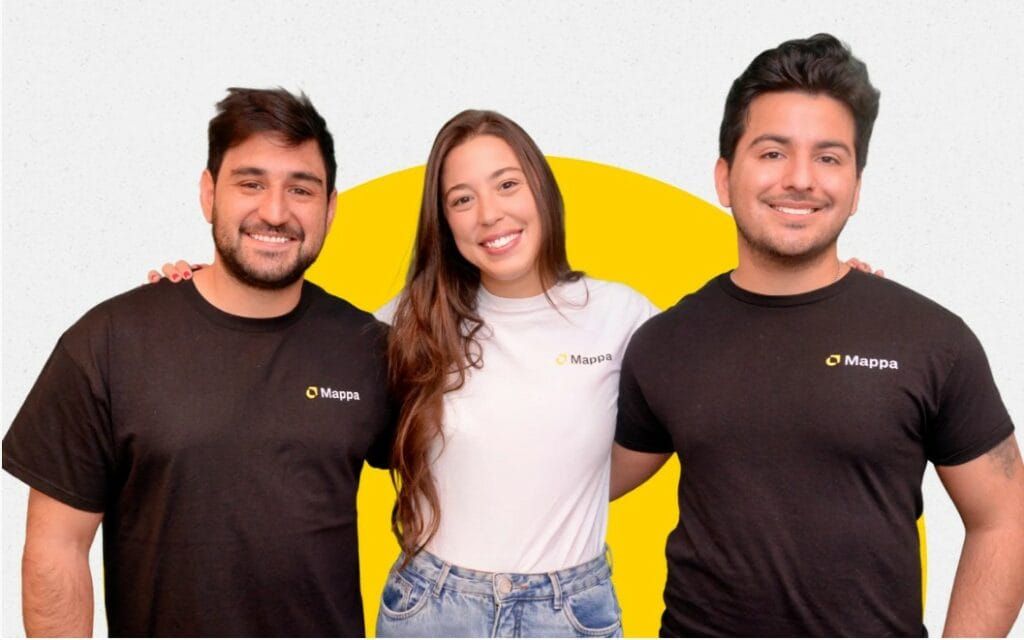
She grew up in a small town in northern Brazil before moving through São Paulo and Uruguay, eventually building MAPPA AI in San Francisco. Today, the company uses behavioral voice AI to help companies make better hiring decisions and recently raised a $3.4 million seed round led by Draper Associates, alongside nine other investors.
Her journey isn't simply about moving countries.
It's about how an international founder built credibility from scratch, turned relationships into opportunities, and raised capital in one of the world's most competitive startup ecosystems.
1. Going Global Was a Decision Made Early
Many founders expand internationally after they've built a successful company at home.
Sarah approached it differently.
MAPPA wasn't designed to become an American company later. It was designed to solve a global problem from the beginning.
When she and her co-founder started the business, they found themselves in an unusual position.
She was Brazilian.
He was Uruguayan.
Rather than debating which country should become the company's home, they asked a different question.
Where should a deep technology company actually be built?
For them, the answer was obvious.
"The US market was the right way to start... there is no better way to build a deep tech company than with the level of competition the US offers."
That's an important distinction.
The decision wasn't driven by fundraising.
It wasn't driven by prestige.
It was driven by the belief that building alongside the world's best competitors would ultimately produce a stronger company.
That mindset also influenced the product itself.
Voice AI wasn't even part of MAPPA's original concept. Sarah explains that it entered the company's journey later, after they had spent time exploring the problem more deeply. Rather than becoming attached to their first solution, the team allowed the product to evolve while staying committed to the mission of helping companies build better teams.
For founders building internationally, that's an important reminder.
You don't need every answer before entering a larger market.
You need conviction about the problem you're solving, while remaining flexible enough to change how you solve it.
2. Before Raising Venture Capital, They Built a Business
There's a common assumption that international founders need venture funding before they can compete in the U.S.
Sarah's story suggests otherwise.
Long before institutional investors entered the picture, MAPPA focused on building something customers would actually pay for.
The company wasn't chasing headlines or fundraising announcements.
It was refining the product, working closely with customers, and building a hiring platform that combined behavioral voice analysis with AI to help companies identify stronger candidates before interviews even began. Rather than simply screening resumes, MAPPA analyzed candidates' speech patterns to give employers additional insights that could help identify stronger candidates before interviews.
That product-first approach gave the company something far more valuable than an early term sheet.
It gave them traction.
When founders raise before they've built evidence, much of the conversation revolves around potential.
When founders raise after proving demand, the discussion shifts toward acceleration.
That's a fundamentally different position to negotiate from.
It also changes the psychology of fundraising.
You're no longer trying to convince investors the business might work.
You're showing them that it already does.
3. Building a Network Is Part of Building the Company
One of the biggest myths surrounding Silicon Valley is that success comes from having the right network.
Sarah's experience suggests something different.
Having a network isn't something you're born with. It's something you build along the way.
As an immigrant founder, she understood she couldn't rely on decades of local relationships or alumni networks.
So instead of treating networking as something separate from company building, she turned it into a process.
She traveled.
She met founders.
She built relationships before asking for introductions.
And perhaps most importantly, she wasn't afraid to ask for help.
That shift wasn't always natural.
In many cultures, asking for introductions can feel uncomfortable or transactional.
In Silicon Valley, it's often viewed differently.
People expect founders to build networks deliberately.
And many are surprisingly willing to help—provided you've already demonstrated commitment and execution.
Relationships didn't replace product.
They amplified it.
Because even in venture capital, introductions only work if there's something worth introducing.
4. Raising Capital as an International Founder
For many international founders, fundraising in the U.S. feels like a networking problem.
Sarah approached it as an execution problem.
Rather than hoping the right investors would somehow discover MAPPA, she built a repeatable fundraising process.
The first step was research.
The team created a database of more than 2,500 investors. But this wasn't simply a long list of venture firms.
They filtered it carefully.
They looked for investors who had previously backed seed-stage companies, invested in international founders, and actively deployed capital in the United States.
Then they layered relationships on top of that research.
Every advisor, founder, and early supporter received the list and answered one simple question:
Who here do you know?
Those names became warm introductions.
The conversations that followed helped refine the next wave of outreach.
Sarah describes the process almost like building a sales funnel.
"I would optimize for volume at the beginning," she explains, because the objective wasn't just to find investors who looked impressive on paper. It was to discover who genuinely connected with the business and who the founders connected with in return.
That process eventually resulted in more than 300 investor meetings.
More importantly, it produced an oversubscribed round.
That completely changed the balance of power.
Instead of asking investors to take a chance on them, Sarah and her team were choosing the partners they wanted around the table.
Their decision came down to three questions:
- Which investors could open meaningful doors?
- Which ones genuinely believed in people, not just technology?
- Which ones would continue expanding MAPPA's network after the round closed?
"I'm an immigrant founder," Sarah says. "I'm somebody that's been building my network from the ground up."
For her, investors weren't simply providers of capital.
They became an extension of that network.
That's a distinction many founders overlook.
The best fundraising outcomes don't just finance the company.
They increase the company's surface area for future opportunities.
5. Being an International Founder Can Become an Advantage
It's easy to frame immigrant founders as operating at a disadvantage.
New country.
New culture.
Limited network.
Sarah sees it differently.
She believes international founders often develop strengths that become powerful competitive advantages.
They're accustomed to uncertainty.
They're resourceful.
They're comfortable building with limited resources.
And because nothing comes automatically, they often approach company building with greater intentionality.
Rather than viewing her background as something to overcome, Sarah learned to use it as part of the company's story.
That perspective also shapes how she thinks about entrepreneurship more broadly.
Near the end of the conversation, she shares a quote that has stayed with her throughout the journey.
"Our business was an overnight success that took me 20 years."
It's a reminder that most startup success stories appear much simpler in hindsight than they ever felt while they were happening.
From the outside, people see the funding announcement.
Inside the company, founders remember the flights, the introductions, the rejected pitches, the product iterations, and the countless conversations that made that announcement possible.
Those quieter moments rarely make the headlines.
But they're usually where companies are actually built.
Final Thought
Sarah Lucena's story isn't really about moving from Brazil to Silicon Valley.
It's about deliberately creating opportunities where none existed before.
She didn't arrive with an established investor network or years of experience inside the U.S. startup ecosystem.
She built both.
Through disciplined execution, thoughtful relationship building, and a willingness to ask for help, she turned what many founders see as disadvantages into strengths.
For international founders, that's perhaps the biggest lesson of all.